
Freeze-dried fruit and vegetables have become a popular option for bird owners, and it's easy to see why. They're lightweight, crunchy, easy to store and incredibly handy for adding variety to bowls, foraging toys and enrichment.
There's also a lot of confusing information around freeze-dried food for birds.
Does it still have nutrients? Is it the same as dehydrated or frozen food? Does it need soaking first? Is the sugar higher? Can it replace fresh fruit and vegetables? And does freeze-dried really mean it lasts 25 years?
Not quite.
Here's what freeze-dried food actually is, where it fits into your bird's diet, and the questions we get asked most often about using freeze-dried fruit and vegetables for birds.
Jump to what you need:
- What is freeze-dried food?
- Freeze-dried vs dehydrated vs frozen
- Does it keep the nutrients?
- Can birds eat freeze-dried fruit and vegetables?
- Does it need rehydrating?
- Is freeze-dried fruit higher in sugar?
- Using it for foraging
- Shelf life and storage
- What to look for when buying
- Frequently asked questions
What Is Freeze-Dried Food?
Freeze drying removes moisture from food without the high temperatures used in conventional dehydration.
The food is frozen first. It's then placed under vacuum, where the frozen water inside changes directly from ice into water vapour. This process is called sublimation.
Because the water is removed while the food is frozen, freeze-dried fruit and vegetables keep much more of their original shape, colour and structure. The finished result is light, dry and crunchy.
Freeze-Dried vs Dehydrated Food: What's the Difference?
Both remove moisture, but they do it very differently.
Dehydration generally uses heat and airflow to evaporate water, which causes food to shrink and become denser, chewier or leathery. Freeze drying uses freezing and a vacuum instead.
That's why a freeze-dried Strawberry can still look remarkably like a Strawberry, while a dehydrated one is usually darker, smaller and much denser.
- Freeze-dried: light, airy and crunchy.
- Dehydrated: denser, shrunken and often chewy.
Neither is automatically better for every purpose. They simply produce very different foods.
Is Freeze-Dried Food the Same as Frozen Food?
No. Despite the name, freeze-dried food isn't simply frozen food.
Frozen fruit and vegetables still contain their water. They're kept at low temperatures to slow spoilage and need to stay frozen until you're ready to use them.
Freeze-dried food starts out frozen, but most of its moisture is then removed under vacuum. That's what gives it the light, crunchy texture and allows it to be stored dry rather than kept in the freezer.
- Frozen: still contains its moisture, needs frozen storage and softens when thawed.
- Freeze-dried: has most of its moisture removed, stays dry and crunchy, and doesn't need to be kept frozen.
Frozen fruit and vegetables can also be a great option for birds once properly thawed, but they serve a different purpose to freeze-dried food.
Does Freeze Drying Keep the Nutrients?
Mostly, yes, but this is one area where marketing claims get carried away.
You may have seen claims that freeze-dried food keeps "97% of its nutrients". There's no single percentage that applies to every fruit, vegetable or nutrient. Retention depends on the food itself, how it was processed, how it's stored and which nutrient you're looking at.
What we can say is that freeze drying does a very good job of preserving nutrients, colour and plant compounds, particularly compared with drying methods that rely heavily on heat.
That doesn't make freeze-dried food nutritionally identical to fresh. Fresh and properly frozen produce still have advantages, and we wouldn't recommend removing fresh food from a bird's diet simply because freeze-dried options are available.
Think of it as another useful way to offer fruit and vegetables, not a replacement for everything fresh.
Can Birds Eat Freeze-Dried Fruit and Vegetables?
Plain freeze-dried fruit and vegetables can be a useful addition for many birds, provided the actual ingredient suits the species you're feeding.
Freeze drying doesn't change whether a food is appropriate. If something needs cooking, special preparation, or shouldn't be offered to birds at all, putting it through a freeze dryer doesn't fix that. Our guide to safe vegetables for birds, guide to safe fruits for birds and list of 200 safe and toxic foods all still apply.
This is why the ingredient list matters. Look past the words "freeze-dried" on the front of the packet and check what's actually inside. Plain fruit and vegetables are very different from products with added salt, sugar, oils, seasonings or flavourings.
A Note on Preservatives
This is one difference worth checking when comparing freeze-dried food with conventional dried fruit.
Sulphur dioxide and related sulphites are widely used to help stop dried fruit browning on the shelf. On Australian labels they may appear as additive numbers 220 to 228, or by name in the ingredient list. Dried Apricots, Sultanas and Apple rings are some of the products where you may come across them.
Freeze drying itself doesn't rely on sulphite preservatives to achieve its shelf stability, so plain freeze-dried fruit is often simply fruit.
It's still worth reading the label rather than assuming. For bird food, we prefer simple products without added sulphites, sugar, salt, oils or flavourings.
Does Freeze-Dried Food Need to Be Rehydrated?
No.
Many birds will happily eat freeze-dried fruit and vegetables exactly as they come from the packet. The crunchy texture is one of the things that makes it so useful. Some birds simply enjoy crunching it, while others will carry it around, break it apart or dunk it in their water bowl themselves.
You can rehydrate it if your bird prefers softer food. Add a little water and let it soften before offering. Different foods absorb water at different rates, so there's no universal soaking time.
Once water has been added, treat it like any other moist food rather than leaving it sitting in the cage for long periods.
Will Freeze-Dried Food Swell in My Bird's Throat?
This is a surprisingly common concern.
Freeze-dried food absorbs water when it becomes wet, which makes people wonder whether the same could happen after a bird swallows it.
Birds generally bite and break food into small pieces rather than swallowing them whole, and many will drink or dunk dry foods while eating. There's no reason to assume normal, appropriately sized pieces will suddenly expand dangerously inside a bird.
As with any food, choose pieces suited to the size of your bird and always provide fresh drinking water.
Does Freeze-Dried Food Dehydrate Birds?
Not in itself. What it lacks is the water naturally present in fresh produce.
A fresh Strawberry is mostly water. A freeze-dried Strawberry has had almost all of that removed. So freeze-dried foods shouldn't be thought of as a source of hydration.
Fresh drinking water should always be available, whether your bird is eating fresh, frozen, dried or freeze-dried food.
Is Freeze-Dried Fruit Higher in Sugar?
Freeze drying doesn't add sugar. The natural sugar already in the fruit simply remains once most of the water is gone.
That does make freeze-dried fruit much more concentrated by weight. A small handful can represent considerably more fresh fruit than it looks like, so it's easy to offer more than you intended.
We'd generally be more generous with freeze-dried vegetables than with very sweet freeze-dried fruits. Something like Little Cheeks Freeze Dried Mixed Berries works well offered a few pieces at a time rather than by the handful. Fruit can still be included, but portion size matters.
Freeze-Dried Food Is Brilliant for Foraging
This is probably our favourite use for it.
Fresh fruit and vegetables are great, but they're awkward inside some foraging toys. Moist food gets pushed into corners, stuck inside holes, or forgotten in a toy where it becomes difficult to clean.
Freeze-dried pieces are dry, light and easy to break into different sizes. They can be:
- hidden inside foraging toys
- mixed through shreddable materials
- tucked into cardboard
- scattered through foraging mats and foraging bowls
- placed onto skewers
- crumbled through other foods
- offered as small rewards during training
Because they're dry, they're particularly handy in enrichment where fresh produce would simply be impractical.
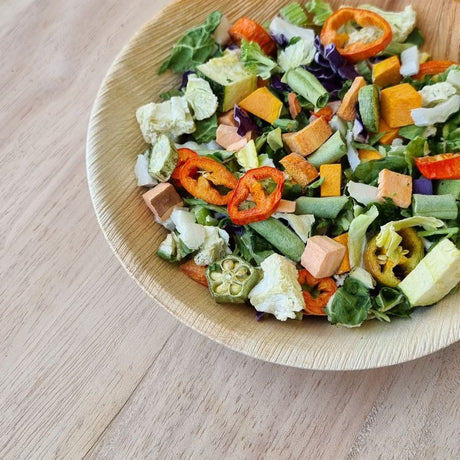
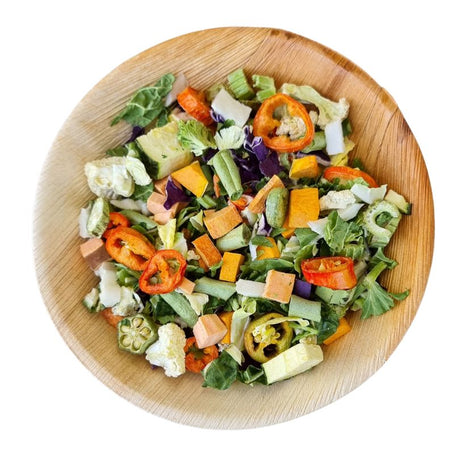
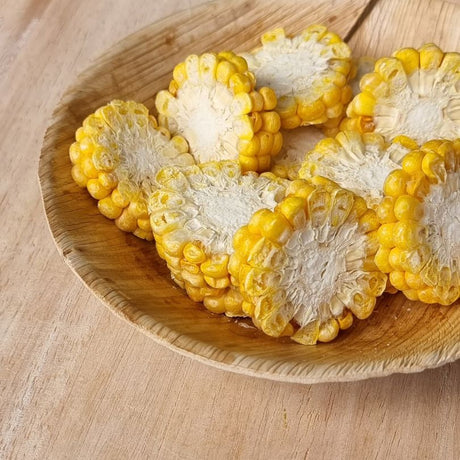
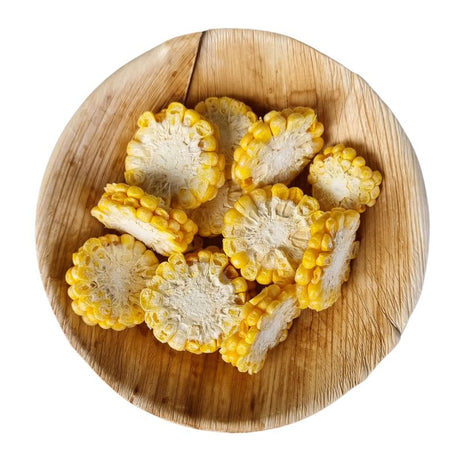
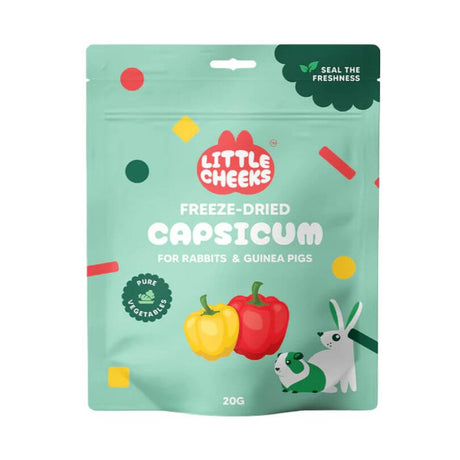
Larger pieces like Raw for Birds Freeze Dried Corn Slices or Little Cheeks Freeze Dried Capsicum work well for holding, chewing and skewers, while a mixed blend such as Raw for Birds Freeze Dried Seasonal Chop gives you a range of shapes and sizes to scatter, hide and crumble.
Does Freeze Drying Kill Bacteria?
No, and this is an important distinction.
Removing water makes it much harder for bacteria, yeasts and moulds to grow while the food stays properly dry. But freeze drying is not the same thing as sterilising.
Some microorganisms can survive the process and become active again when moisture returns.
Dry does not mean sterile. Freeze-dried foods still need to be produced, handled and stored properly, and once rehydrated they should be treated like any other moist food.
How Long Does Freeze-Dried Bird Food Last?
This depends heavily on packaging and storage.
You may have seen freeze-dried food advertised as lasting 20 or even 25 years. Those claims usually come from the long-term food storage industry, where food is sealed in specialised packaging designed to keep out moisture and oxygen for many years.
That's very different from an opened packet of freeze-dried vegetables being used every day for your bird.
Once a packet is opened, humidity, temperature, light and repeated exposure to air all start to matter. Rather than relying on a universal number, follow the storage and best-before information on the product and pay attention to changes in texture, smell or appearance.
How to Store Freeze-Dried Bird Food in Australia
This matters more here than most overseas advice suggests.
Freeze-dried food readily absorbs moisture. If you live somewhere warm and humid, and Queensland is a very good example, leaving a packet open on the bench works against you very quickly. Humidity softens the food and eventually creates conditions where spoilage becomes possible.
Keep freeze-dried foods:
- tightly sealed
- somewhere cool and dry
- away from direct sunlight
- away from steam and kitchen humidity
- sealed again as soon as you've taken out what you need
If the packaging has a good resealable closure, use it properly. Otherwise, moving the food into an airtight container can make storage much easier.
The same advice applies anywhere with a warm or humid climate, not just Australia. If you'd like more on keeping bird food fresh in the Australian climate, our guide to storing bird seed covers the same ground for dry seed.
Why Is Freeze-Dried Food So Expensive?
It's a fair question, and much of the answer comes down to the process, equipment and how much fresh produce it takes to make a small amount of finished food.
Freeze drying requires specialised machinery that freezes the food and then holds it under vacuum for many hours while the moisture sublimates away. The equipment is expensive to buy and run, and the process is slow compared with ordinary dehydration.
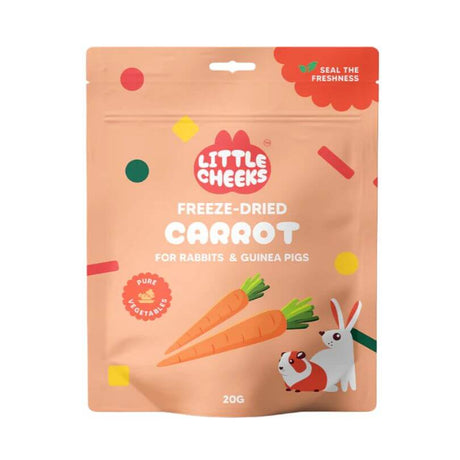
There's also the water. Removing almost all the moisture means a large amount of fresh produce becomes a small, light packet. A 20g packet of freeze-dried Carrot started life as a great deal more Carrot than that.
Whether it's worth it depends on how you use it. As a complete replacement for fresh vegetables it's an expensive way to feed a bird. As a convenience option, a travel food and a foraging ingredient, a packet can go a very long way.
Can I Freeze Dry Food for My Bird at Home?
Yes, but you need an actual freeze dryer.
A kitchen freezer cannot freeze dry food by itself, and a food dehydrator produces dehydrated food rather than freeze-dried food. Home freeze dryers create the freezing and vacuum conditions needed for sublimation, and they're very different in price and complexity from an everyday dehydrator.
If you do make it at home, normal food handling still applies. Freeze drying should never be treated as a way of making questionable ingredients suitable to eat.
Can I Give My Bird Freeze-Dried Food Made for Humans?
Potentially, yes. The important question isn't whether the packet was marketed for people or birds. It's what's actually in it.
A packet containing nothing but freeze-dried Strawberries is very different from Strawberry pieces coated in sugar. Plain freeze-dried vegetables are very different from vegetable snacks with salt, seasoning or oil.
Check the ingredient list. If the only ingredient is a fruit or vegetable you'd otherwise be comfortable offering, it may well be suitable.
What to Look For When Buying Freeze-Dried Food for Birds
Start with the ingredient list. Simple is usually better. Look for products that clearly tell you what's inside, how it should be stored and whether anything has been added.
You can also choose based on how you intend to use it. Larger pieces are great for holding, chewing or adding to a skewer, while smaller pieces and crumbs work brilliantly in foraging toys and food mixes.
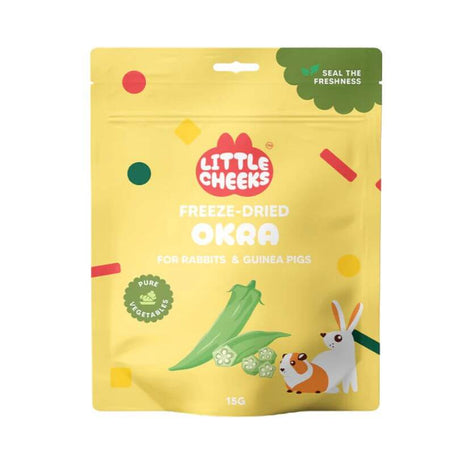
Variety helps too. Different colours, shapes, flavours and textures give birds more to investigate than the same bowl every day. Single vegetables like freeze-dried Broccoli, Carrot or Okra let you target what your bird already likes, while a mixed blend such as Beak Joy Freeze Dried Seasonal Vegetables or Beak Joy Freeze Dried Seasonal Fruit and Vegetables gives you range in one packet.
You can see the full freeze-dried food range here.
Where Freeze-Dried Food Fits Into a Bird's Diet
Think of freeze-dried fruit and vegetables as another tool in the cupboard. They make it easier to add variety, reduce waste and create more interesting foraging.
They're not magic. They don't make every ingredient appropriate for birds, they don't retain every nutrient exactly as it was in the fresh food, and being freeze-dried doesn't mean a packet lasts forever once opened.
Used alongside an appropriate overall diet, fresh produce and plenty of enrichment, they're incredibly practical. If you're working on getting more fresh food into a seed-loving bird, our guide to soaking seed and guide to sprouting seed are worth a read alongside this one.
And if you've ever put a piece of fresh Broccoli inside a complicated foraging toy and then forgotten about it until the next day, you'll probably appreciate exactly why.
Frequently Asked Questions
Can birds eat freeze-dried fruit dry?
Yes. Freeze-dried fruit and vegetables don't usually need rehydrating before being offered. Some birds prefer the crunch, and many will dunk pieces in their water themselves.
How much freeze-dried food can I give my bird?
There's no single amount that suits every bird. It depends on the species, size and the rest of the diet. With freeze-dried fruit in particular, remember that removing the water makes it much more concentrated by weight, so a small portion can represent considerably more fresh fruit than it looks like. If you're unsure about the right balance for your bird, speak with an avian veterinarian.
Is freeze-dried food suitable for Budgies and Cockatiels?
Budgies and Cockatiels can be offered suitable freeze-dried fruit and vegetables, provided the ingredient itself is appropriate and the pieces suit the size of the bird. Smaller birds may find crumbled or broken-up pieces easier to manage than large slices.
Can freeze-dried food go mouldy?
Properly freeze-dried food doesn't provide enough available moisture for mould to grow. Once it absorbs moisture, that changes. This is why sealing the packet and keeping it somewhere cool and dry matters, especially in a humid climate.
Can I use freeze-dried food as training treats?
Yes. The pieces are dry, easy to break into small amounts and not messy to handle, which can make them practical for training and interaction. They sit nicely alongside other bird treats as a lower-mess option.