
Alexandrines chew. Properly. Give one a toy made for a Budgie and there is a fair chance it will be reduced to pieces before you have decided where to hang the next one.
So, what can you give an Alexandrine that will not be destroyed in a day? The honest answer is to stop looking for one indestructible toy. A better setup includes a few tougher toys that should last longer, plus a steady supply of cheaper toys made to be pulled apart.
Every bird chews differently, so no toy comes with a guaranteed lifespan. These are the options we would start with based on their materials, size and feedback from owners of Alexandrines and similarly sized parrots.
Jump to Tougher Toys, Toys to Destroy, Forage Box Refills, How to Buy for a Strong Chewer or Common Questions.
Which Toys Last Longer for Alexandrines?
Start with acrylic foraging toys, wood threaded onto chain and larger toys with plenty of material to work through. They will still show chew marks and eventually need replacing, but they generally give a strong beak more of a challenge.
Foraging Wheel

This acrylic forager bolts to the side of the cage and has five compartments for dry food, treats or fresh ingredients. Your bird has to turn the wheel to reach each opening, giving it something to work out as well as something to eat. Both the Gen 1 Clear and Gen 2 Green are suitable for Alexandrines, with the Gen 2 being the larger option.
Our Alexandrine loves this. It gives her so much stimulation and she enjoys trying to get her favourite treats out. Best purchase of a foraging toy.
Josephine M., bought for her Alexandrine
Simple Buster Blocks
The Simple Buster Blocks combines coloured wood blocks, beads, chain and leather tassels. The wood is there to be chewed, while the chain helps hold the toy together as your bird works through it. It is not a huge toy, but Alexandrine owners have rated its size as suitable.
This has become the favourite toy in my Alexandrine's bird cage. They love the bright colours and play with it constantly.
Marian B.
Birdnerd Natural Swing and Natural Spiral

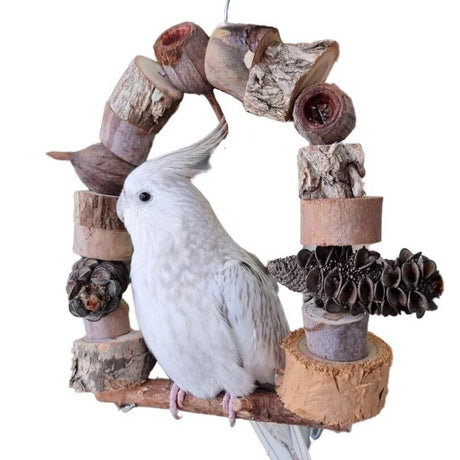
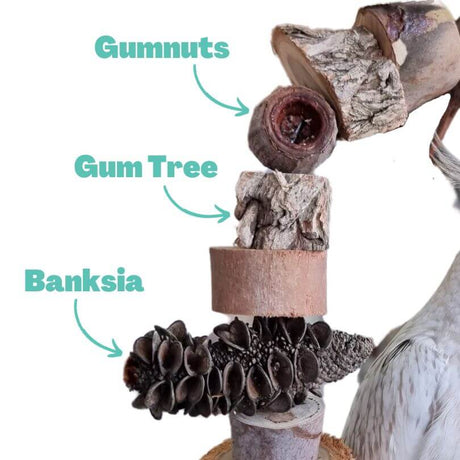
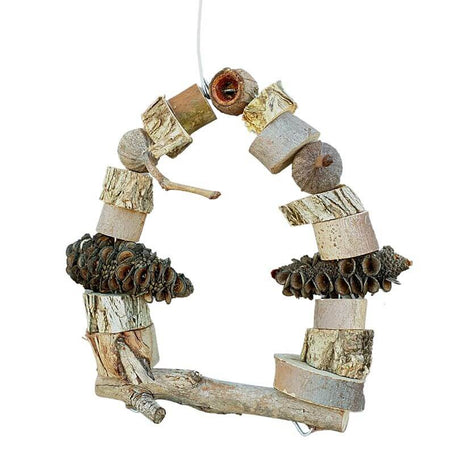
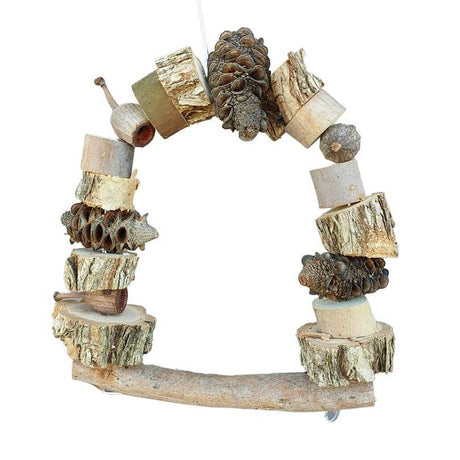
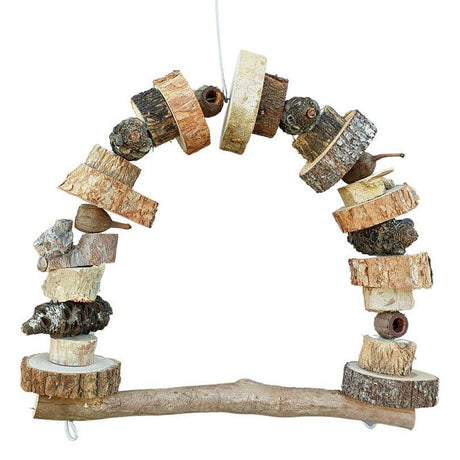
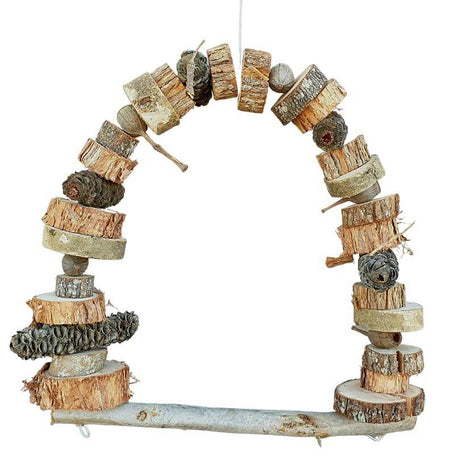
These are handmade with Australian native wood slices, Gumnuts and Banksias on a wire centre. They give an Alexandrine rough bark, firm wood and plenty of pieces to investigate. The Natural Swing can be used for climbing, chewing and resting, while the bendable Natural Spiral can be shaped to fit the cage. Choose the Large for an Alexandrine.
Mega Parrot Swing and Play
If you have the cage space, the Mega Parrot Swing and Play is the heavy-duty option. It has two thick Java wood perches, chain hanging points and a mix of wicker, corn husk, vine and wooden chews. It is a very large swing, so check the product dimensions against the cage before ordering. It suits Alexandrines, but makes the most sense for a large setup, a pair of birds or a bird that uses every part of its toys.
Which Toys Are Made for Alexandrines to Destroy?
Not every toy should be expected to last. Pulling apart cardboard, sola, wicker, yucca, Banksias and Pinecones gives an Alexandrine an appropriate place to use that beak. The mess is part of the point.
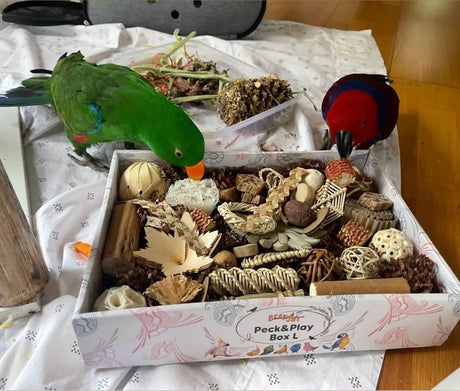
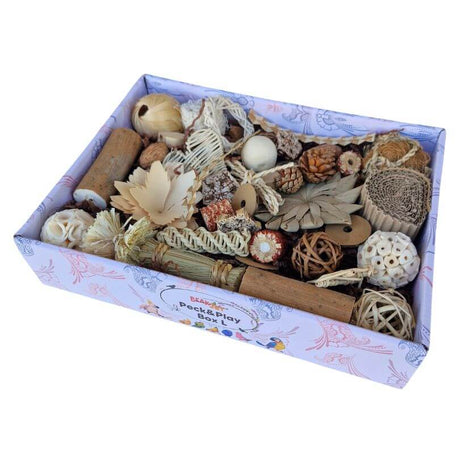
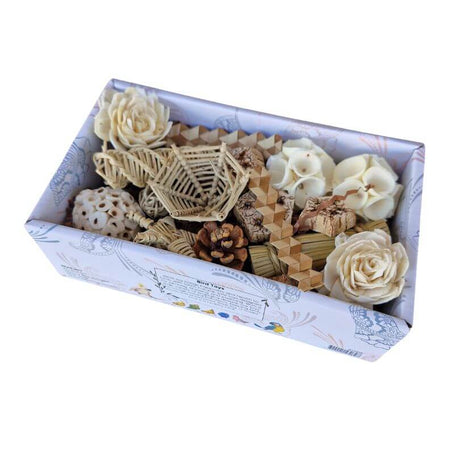
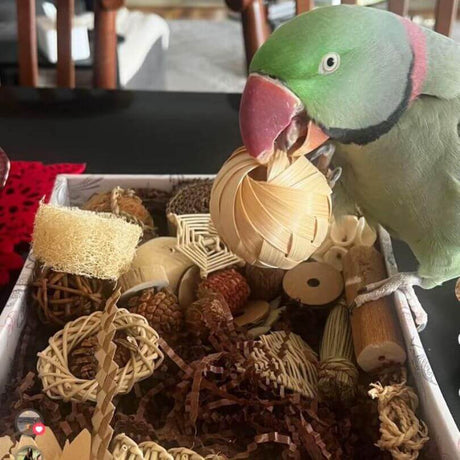
Beak Joy Peck and Play Forage Box

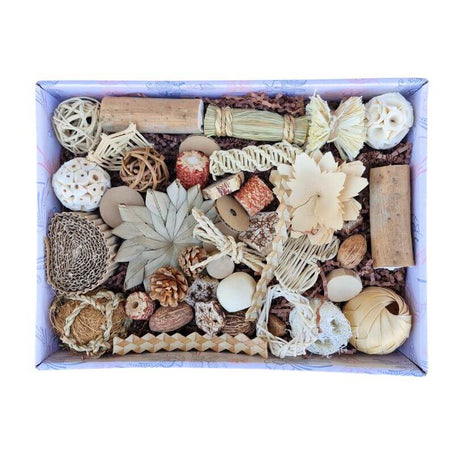
This cardboard forage box comes packed with shredded paper and more than 25 different textures and shapes in the Large. Remove the plastic lid, hide a few favourite treats through the layers and let your bird dig through it. The box itself can be chewed and whatever survives the first session can go back in for another round. We recommend the Large Beak Joy Peck and Play Forage Box for an Alexandrine.
Our two Alexandrines love it. We've put it on top of their cage and they get a fair amount of fun out of it before it all gets chewed to pieces.
Ben P., bought for his Alexandrines
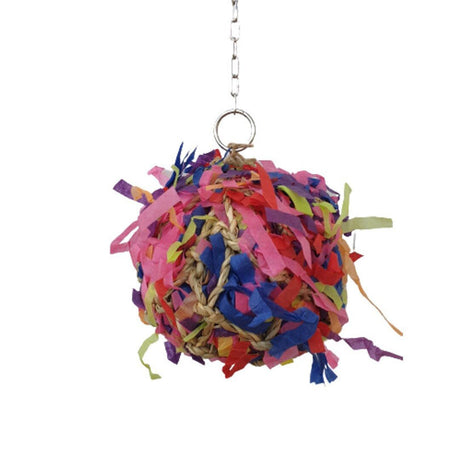
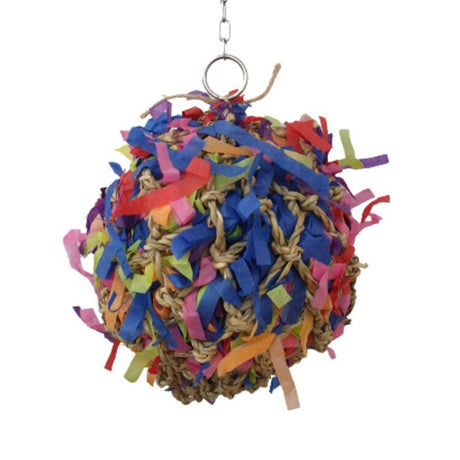
Foraging Shredder Ball
The Foraging Shredder Ball is a hanging ball already filled with paper for your bird to pull out. Add a treat inside to get a cautious bird started. The filling is expected to disappear, but the outer ball may keep going for more play depending on how determined your Alexandrine is. Choose the Large.
Cactus Kabob Chew
Yucca is soft and satisfying to bite into, which is exactly why the Cactus Kabob Chew belongs in the destroy pile. The Large gives an Alexandrine more material to work through. Some birds take their time and others turn it into matchsticks, so buy it for the chewing rather than expecting it to stay intact.
Raw for Birds Floral Banksia and Pinecone Chews
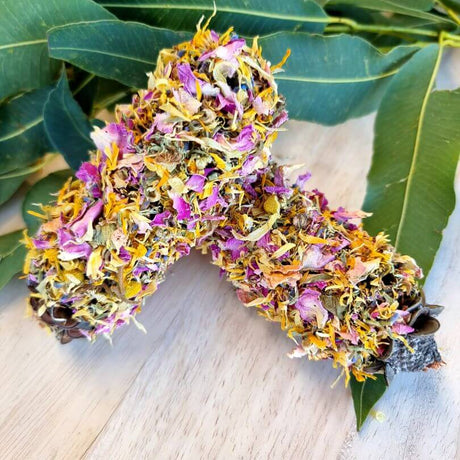
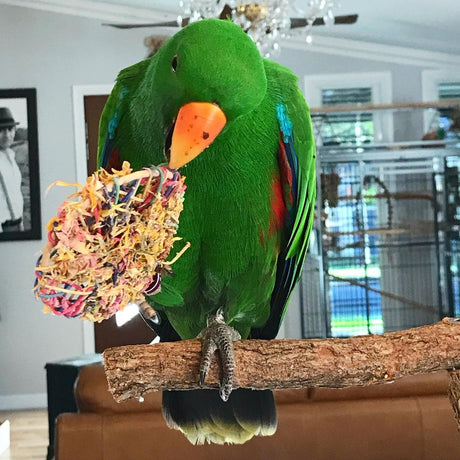
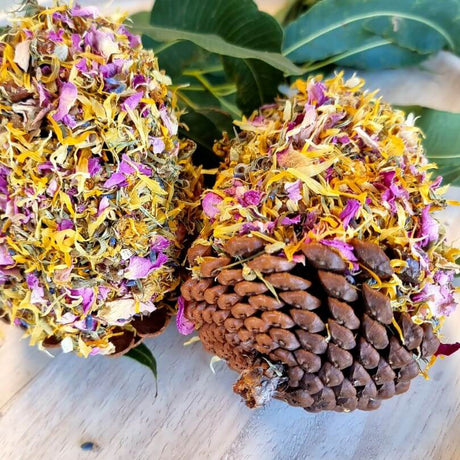
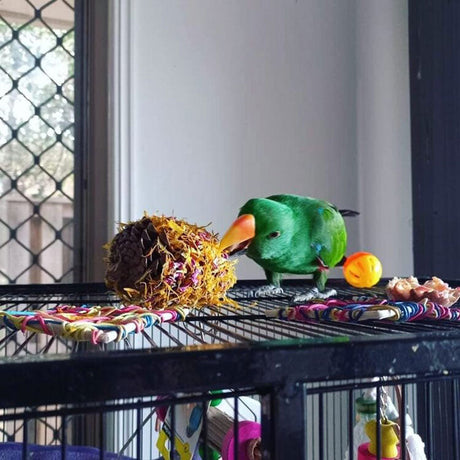
The Floral Banksia Chews and Floral Pinecone Chews are natural pods dusted with dried flowers. The firm Banksias give a strong beak something tougher to pick at, while the Pinecones have layers that can be pulled apart. Drop one into a foraging tray or place it somewhere your bird can reach easily. Due to quarantine restrictions, these products cannot be sent to Western Australia or Tasmania.
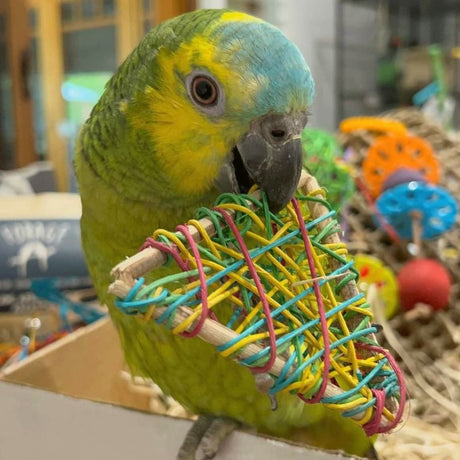
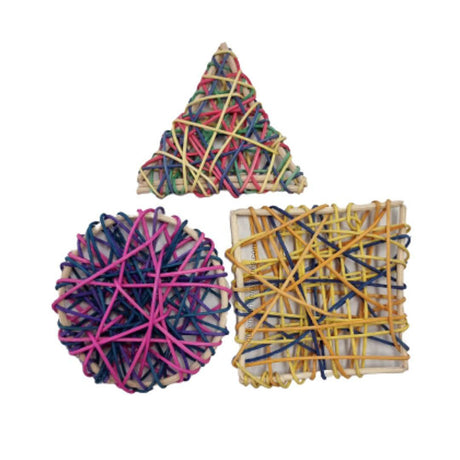
Foot Toys
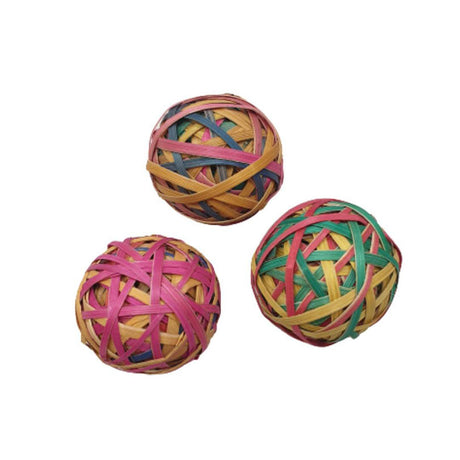
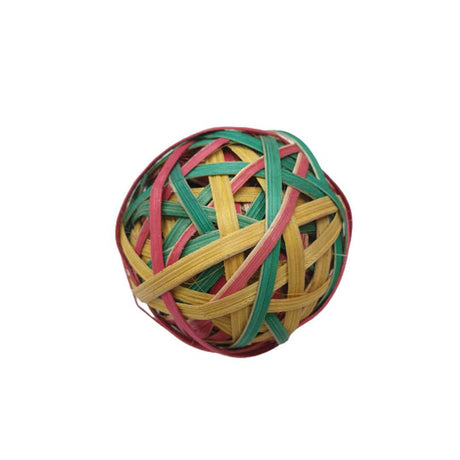
Alexandrines are good at holding an object in one foot while taking it apart with their beak. Raw for Birds Floral Foot Toys, the Bamboo Ball and the Rainbow Shapes Foot Toy are simple options for picking up, carrying and chewing. Put one or two in a tray or on a clean cage floor and replace them as they are demolished.
What Can I Use to Refill a Forage Box?
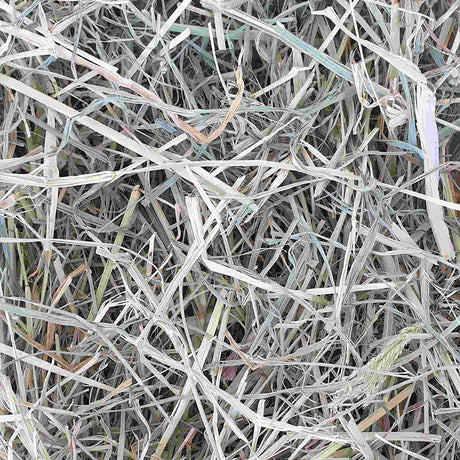
Once the original filling is gone, refill the box with a mix of easy and harder materials. Raw for Birds Foraging Grass is Queensland Rhodes grass with the seed heads still on, an easy layer for the bottom of the box. Natural Foraging Material in Large contains Banksias, Gumnuts and Australian native wood slices for more serious chewing. Like the Raw for Birds chews, neither of these can be sent to Western Australia or Tasmania.
Add Large Sola Cabbage Balls or Sola Flowers for something soft and quick to shred, then hide a small amount of food through the layers. Expect pieces on the floor. A neat forage box is usually one that has not been discovered yet.
How Should I Buy Toys for a Strong Chewer?
Think in two groups. Keep one or two tougher toys for climbing, swinging or working out how to reach food. Alongside them, offer cheaper chew toys that are supposed to be finished. If your Alexandrine destroys sola or cardboard in one sitting, the toy has still done its job.
Do not judge value only by how many days a toy survives. A lower-cost toy that gets an hour of enthusiastic chewing can be more useful than an expensive one that your bird ignores. Rotate toys as interest drops, but avoid changing the whole cage at once if your bird is wary of new objects.
Inspect toys every day. Check clips, chain, wire, leather and any loose or frayed material, and remove the toy if it becomes damaged. No bird toy is risk-free, and a toy that suited your bird yesterday may need to come out after one determined chewing session.
Common Questions About Alexandrine Toys
What toys usually last longest for an Alexandrine?
Acrylic foragers, toys built around chain, and large wooden swings generally give an Alexandrine more of a challenge. The Foraging Wheel, Simple Buster Blocks, Birdnerd Natural Swing and Natural Spiral, and Mega Parrot Swing and Play are good places to start. Durability will still depend on the individual bird.
Is it normal for an Alexandrine to destroy a toy in one day?
Yes. Sola, cardboard, wicker, paper and yucca are offered because birds can chew and pull them apart. Fast destruction does not automatically mean the toy was a poor choice.
What size toy should I choose for an Alexandrine?
Alexandrines usually need toys made for medium to large parrots. On the products in this guide, that generally means the Large option. Always check the measurements as well as the size name, because Large is not consistent across every brand.
What is the best foraging toy for an Alexandrine?
Choose the Foraging Wheel if you want a washable puzzle that can be used repeatedly. Choose the Large Beak Joy Peck and Play Forage Box if your bird prefers digging, chewing and pulling materials apart. They offer different types of foraging, so many Alexandrines will benefit from both styles.
What should I do if my Alexandrine is scared of a new toy?
Place it outside the cage where your bird can see it without being forced near it. Move it closer gradually and add a familiar treat once your bird is comfortable. Let your bird set the pace rather than hanging an unfamiliar toy beside its favourite perch straight away.
How many toys should an Alexandrine have?
There is no perfect number. Aim for enough variety to provide chewing, foraging, climbing and play without crowding the cage or blocking movement. For many cages, three or four well-chosen toys at a time is a practical starting point.
Can I make my own Alexandrine toys?
Simple cardboard and paper foraging activities can work well, provided every material is suitable for birds and free from tape, staples, unknown inks, glues and loose threads. Supervise new homemade toys closely and remove them if damaged parts create a trapping or swallowing hazard.
Do Alexandrines need foot toys?
Foot toys give them another way to pick up, carry and chew objects. Choose pieces large enough for the bird to hold without swallowing, and inspect them regularly as they are pulled apart.