
Birds are messy eaters. The trick isn't stopping the behaviour. It's stopping most of the mess from reaching the floor.
Husks, unwanted seed and bits of fresh food are all part of living with a bird, but the right feeder and cage setup can make a surprisingly big difference to how much ends up under the cage.
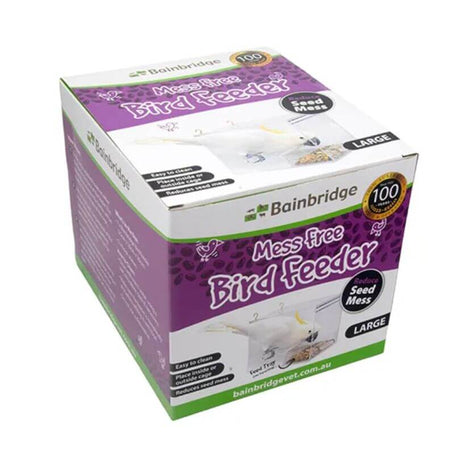
Here's why birds make such a mess, how the Bainbridge Mess Free Bird Feeder helps, and how to get your bird comfortable using one. There's now an Xlarge size that finally suits the large Macaws and big Cockatoos, which has been a long time coming.
Jump to Why Birds Are So Messy, How a Mess Free Feeder Works, Getting Your Bird to Use It, Choosing a Size or Frequently Asked Questions.
Why Does My Bird Throw Seed Everywhere?
Usually because they're being a bird.
Husking seed. Many seeds have an outer shell that your bird cracks before eating the kernel inside. The empty husk is then dropped, which is why a seed bowl can look half full even when much of what's left is just shell.
Picking out favourites. Birds don't politely work their way through a bowl from top to bottom. They'll dig, flick and throw food aside to reach whatever they want first.
Handling food with their beak. Parrots regularly pick food up, turn it around, bite pieces off and drop what they don't want. Some species will also hold food in a foot while eating, creating even more opportunities for bits to escape.
Beak wiping. After softer or stickier foods, birds often wipe their beak along a perch or cage bar. That's responsible for plenty of the food marks around a cage too.
Throwing things because they can. And yes, some birds appear to genuinely enjoy this part.
Trying to stop every bit of mess isn't realistic. Containing it is much easier.
How Does a Mess Free Bird Feeder Work?
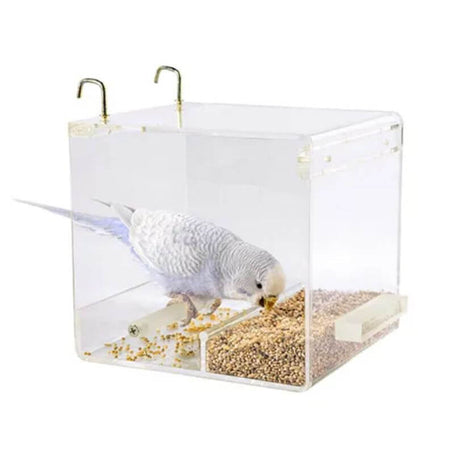
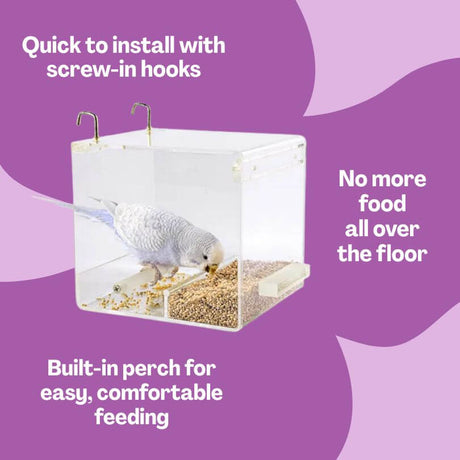
The Bainbridge Mess Free Bird Feeder replaces an open food bowl with a covered feeding area that your bird steps into.
The food sits further inside the feeder, so much of the seed, husks and food your bird drops or flicks stays inside rather than being launched through the cage bars and onto the floor.
It won't make a bird completely mess free. A determined parrot can still carry food out, and fresh food can always end up somewhere unexpected. What it does particularly well is contain the everyday shower of seed and husks around the cage.
It can also reduce wasted food. Seed that stays inside the feeder can be managed much more easily than seed scattered across the cage floor.
If you're buying seed in larger quantities, our guide to storing bird seed also covers how to keep it fresh once you get it home.
Getting Your Bird to Use a Mess Free Feeder
Some birds walk straight in. Others take one look at the new piece of furniture and decide it requires a full investigation first.
Don't force it.
Start with something worth investigating. Put a small amount of a favourite food inside. Millet, a favourite seed, a nut or another familiar treat can be enough to get a curious bird looking inside.
Position it near somewhere familiar. Mount the feeder beside a perch or close to the position of the bird's existing food bowl.
Keep the normal bowl available at first. Don't remove your bird's usual food source until you've actually seen them entering the feeder and eating comfortably.
Let them work it out in their own time. Confident birds may use it immediately. More cautious birds can take longer, particularly if they're suspicious of anything new in the cage.
Should the Feeder Go Inside or Outside the Cage?
Either can work, depending on the cage and the bird.
Mounting it outside preserves more room inside the cage. Make sure the feeder is properly supported and positioned where it can't easily be knocked or disturbed.
Mounting it inside can suit stronger or more destructive parrots and keeps the entire feeder within the cage structure.
Whichever way you install it, check that it sits level, attaches securely and doesn't obstruct doors, perches or your bird's normal movement around the cage.
Using a Tray Insert
Removable tray inserts are available for all three feeder sizes and make filling and cleaning much easier.
Instead of reaching into the feeder, the tray can be removed, filled and slid back into place. They're particularly handy if you use the feeder for pellets or fresh foods that need changing regularly.
Which Mess Free Feeder Size Do I Need?
The right size is less about squeezing your bird through the opening and more about giving them enough room to enter, eat and move comfortably.
Small
Suits many smaller birds including Budgies, Cockatiels, Lovebirds, Parrotlets, Finches, Quakers, smaller Conures, Ringnecks and Rainbow Lorikeets.
Large
Suits many medium and larger parrots including African Greys, Amazons, Eclectus, Galahs, Corellas, Alexandrines, Crimson Rosellas, Princess Parrots and some smaller Macaws. It can also suit Doves and Pigeons.
Xlarge: For Large Macaws and Big Cockatoos
This is the size people have been waiting for.
Mess free feeders have been around for years, but there was never one big enough for the largest birds. Plenty of Macaw and Cockatoo owners have looked at a feeder, worked out their bird would never fit, and gone back to sweeping the floor twice a day.
The Xlarge Mess Free Bird Feeder changes that.
Mess Free Feeder for Macaws
The Xlarge is sized for the large Macaws, including Blue and Gold, Scarlet and Green Wing. There's enough room for a big bird to step in, turn around and eat properly rather than perching awkwardly at an opening that was never designed for them.
Macaws are among the messiest birds you can keep, simply because of their size and the way they handle food. A Macaw working through nuts, seed and fresh chop can cover a remarkable amount of floor in a single sitting.
Mess Free Feeder for Cockatoos
The Xlarge also suits the big Cockatoos, including Sulphur Crested Cockatoos and Black Cockatoos.
If you keep a Sulphur Crested or a Black Cockatoo, you already know they're in a mess category of their own. Between the shredding, the husking and the general enthusiasm, an open bowl doesn't stand much chance. A feeder they can step into contains a great deal of what would otherwise end up across the room.
Black Cockatoos in particular spend a long time working on hard food, and that's a long time dropping pieces. Containing it at the source makes a real difference to daily clean-up.
Also Worth Considering If
The Xlarge is also a good option if you want more feeding capacity in one place, or if your bird is technically a Large but you'd rather they had extra room. There's a tray insert sized for it as well.
If you've been after a no mess feeder for a Macaw or a big Cockatoo and given up looking, this is the one.
Still Not Sure?
Your bird should be able to enter and position itself comfortably without looking cramped. If you're deciding between two sizes, the larger feeder is generally the more practical choice provided it fits your cage.
What Can You Put in a Mess Free Bird Feeder?
You can use it for most foods you'd normally offer in a bowl, including:
- bird seed
- pellets
- sprouted seed
- fresh vegetables
- fresh fruit
- dry Lorikeet food
Don't use it as a water container. The feeder isn't designed to hold water and isn't watertight.
Fresh food also needs the same care it would in any other bowl. Remove leftovers promptly, particularly during warm or humid weather.
Our guide to protecting your bird from mould explains why damp food and warm conditions are a combination worth staying on top of.
How to Clean a Mess Free Bird Feeder
Remove loose seed, husks and food first, then wash the feeder with warm water and a mild detergent. Rinse thoroughly and allow it to dry completely before refilling.
If you're disinfecting it, clean it first. Disinfectants work properly on a clean surface, not through layers of food and organic material.
F10SC Veterinary Disinfectant or F10 Wipes can be useful for this step when used according to their directions.
Our guide to cleaning your bird's environment explains cleaning and disinfecting in more detail.
Do not put the feeder in the dishwasher.
Other Ways to Reduce Bird Seed Mess
A covered feeder tackles one of the biggest sources of mess, but a few smaller changes can help too.
- Use a cage skirt or seed guard. It can catch some of the material that still makes it through the bars.
- Put something easy to clean underneath. Newspaper, a washable mat or another suitable floor covering makes daily clean-up much faster.
- Don't overfill the food bowl. A deep pile gives a bird plenty to dig through and throw around while looking for favourites.
- Use foraging toys. Moving some food away from the bowl encourages your bird to spend longer finding and working for it. Browse our foraging toys.
Frequently Asked Questions
Why does my bird throw its food everywhere?
Husking seed, searching for favourite foods, breaking food apart and dropping unwanted pieces are all normal bird behaviours. Some parrots also seem to enjoy throwing things simply because it's interesting to do.
Is there a mess free feeder that fits a Macaw?
Yes. The Xlarge Bainbridge Mess Free Bird Feeder is sized for the large Macaws including Blue and Gold, Scarlet and Green Wing. Until recently there wasn't a mess free feeder big enough for them, which is why a lot of Macaw owners gave up looking.
Is there a mess free feeder for Cockatoos?
Yes. The Xlarge suits the big Cockatoos including Sulphur Crested and Black Cockatoos. Smaller Cockatoos and Corellas are generally well served by the Large.
What size feeder does a Black Cockatoo need?
The Xlarge. Black Cockatoos need room to step in and work on food properly, and they spend a long time doing it, so a feeder they can actually get into makes a considerable difference to the mess.
Do mess free bird feeders actually work?
They can make a significant difference to seed and husks around the cage because much of the mess is contained inside the feeder. They won't stop every piece of food escaping, but they're particularly useful for birds that create a constant scatter of seed around an open bowl.
Which size Mess Free Bird Feeder should I buy?
Choose a feeder that gives your bird enough space to enter and eat comfortably. Small suits smaller parrots and birds, Large suits medium to larger parrots including Galahs, Corellas and smaller Macaws, and Xlarge is for the large Macaws and big Cockatoos. If your bird is between sizes and your cage has the space, go larger.
Can I put pellets in a Mess Free Bird Feeder?
Yes. Pellets work well in the feeder, as do seed, sprouts, fruit, vegetables and dry Lorikeet food.
Can I put fresh food in it?
Yes. Fresh fruit and vegetables can be offered inside the feeder. Remove leftovers promptly and clean the tray or feeder regularly, particularly in warm weather.
Can I put water in it?
No. The feeder isn't watertight and isn't designed to be used as a water container.
Should I mount the feeder inside or outside the cage?
Both options can work. Outside mounting saves cage space, while inside mounting may be more practical for larger or stronger parrots. The important part is making sure the feeder is level, secure and easy for your bird to access.
What if my bird is frightened of the feeder?
Leave their normal food bowl available and give them time to investigate. Position the feeder near a familiar perch and place a favourite food inside to encourage them to take a closer look. Don't force a nervous bird into it.
Is the Bainbridge Mess Free Bird Feeder dishwasher safe?
No. Wash it by hand with warm water and a mild detergent, rinse thoroughly and allow it to dry before refilling.