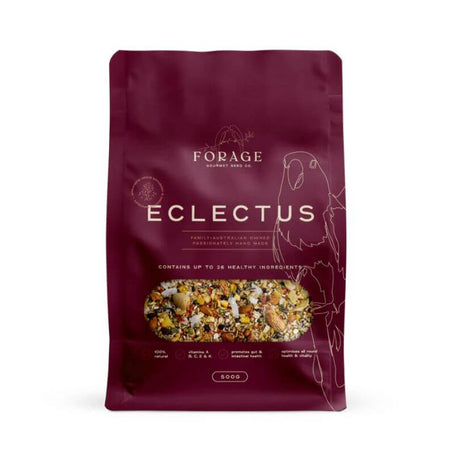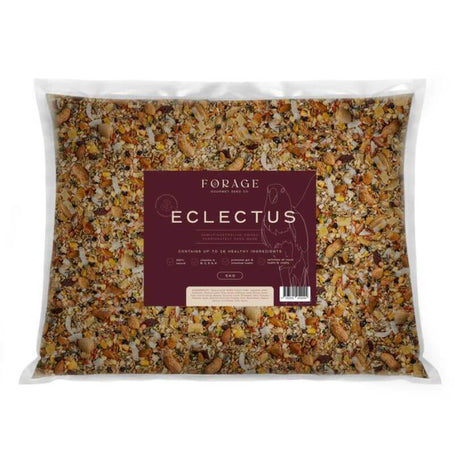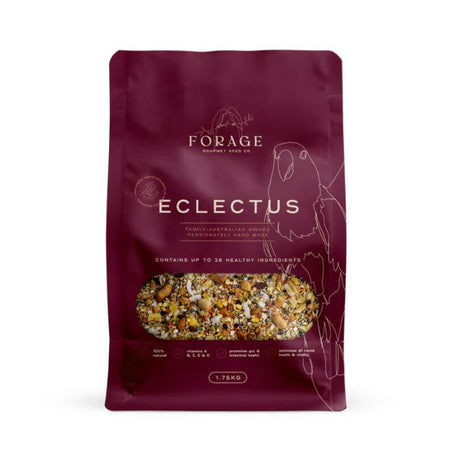

Eclectus are the species people most often get wrong.
Not through carelessness. They're often fed the same way as a Galah, Amazon or other parrot, when Eclectus tend to do better with considerably more variety and a much greater emphasis on fresh food.
The complicated part is that Eclectus nutrition attracts a lot of very confident advice, particularly around pellets, vitamins and toe-tapping, and not all of it is as settled as it sounds.
Here's what we know, what's still debated, and how we'd approach feeding an Eclectus.
Jump to Fresh Food, Pellets, Seed and Sprouts, Toe-Tapping and Wing-Flipping, Supplements or What to Avoid.
Fresh Food Is an Important Part of an Eclectus Diet
If there's one thing worth getting right, it's variety.
Eclectus should be offered a generous range of fresh vegetables and fruit rather than relying heavily on dry seed. Colourful vegetables are particularly useful, including plenty of foods rich in beta-carotene, which the body can convert to vitamin A.
Good foods to rotate through include:
- Orange, yellow and red vegetables. Carrot, Pumpkin, Capsicum and cooked Sweet Potato are all useful additions.
- Dark leafy greens. Kale, Bok Choy, Silverbeet, Endive, Rocket and Dandelion leaf.
- Other vegetables. Broccoli, Peas, Beans, Zucchini, Cauliflower and Corn can all add variety. Our guide to vegetables for birds has plenty more ideas.
- Fruit. Apple, Pear, Mango, Papaya, Berries, Pomegranate, Melon and other suitable fruits can all be offered. We prefer vegetables to make up the greater share of the fresh bowl rather than letting a fruit-loving Eclectus pick out the sweetest bits all day. Our guide to fruit for birds has more options.
- Cooked legumes. Lentils, Chickpeas and Beans can be included once properly cooked.
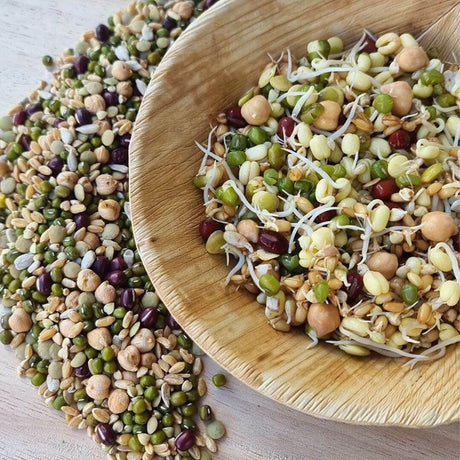
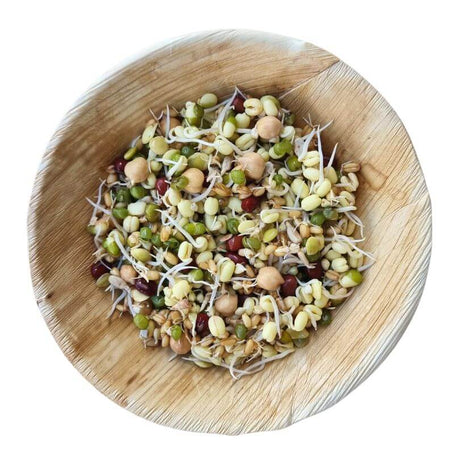
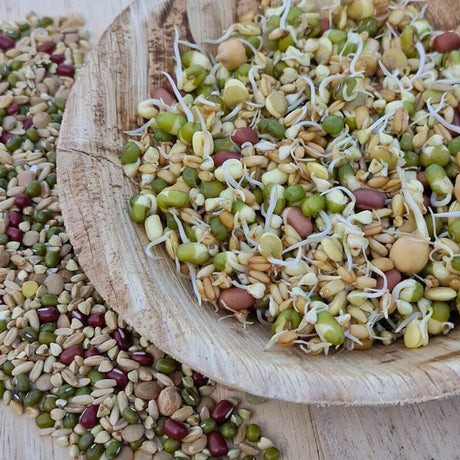
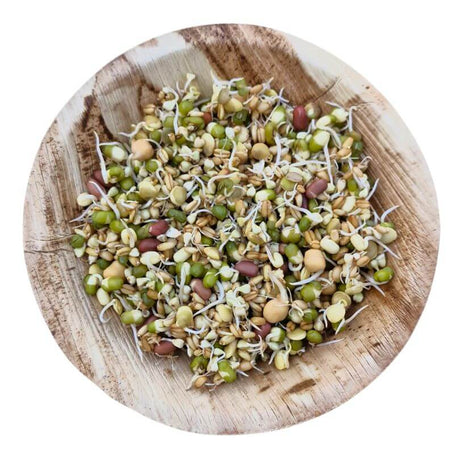
- Soaked and sprouted seed. Both are useful ways to add another texture and variety to the fresh part of the diet.
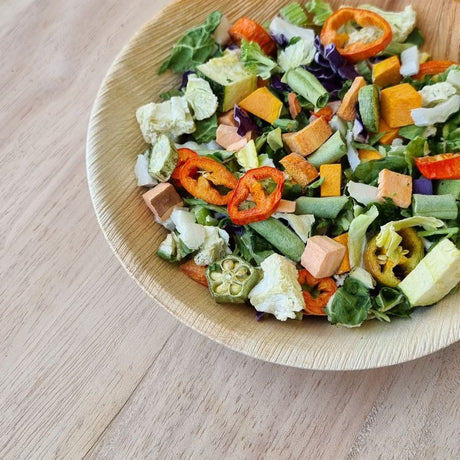
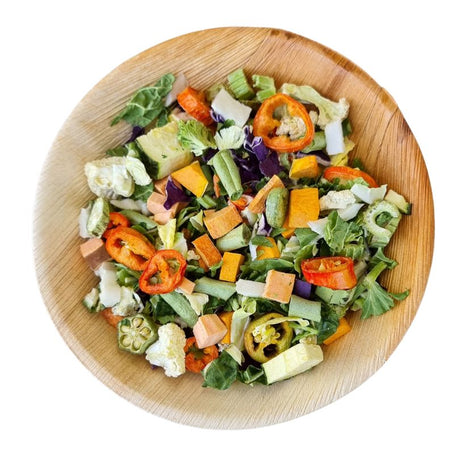
Chop is probably the easiest way to manage the vegetable side of things. Make a batch with plenty of variety, portion it and freeze what you won't use while it's fresh.
Does Everything Need to Be Chopped?
No. A bowl of finely chopped food is convenient, but don't turn every meal into confetti.
Give larger pieces as well. A chunk of Capsicum, a leafy green clipped to the cage or a piece of Corn takes longer to eat and gives your Eclectus something to pull apart rather than simply standing over a bowl.
Fresh food can be nutrition and enrichment at the same time.
Can Eclectus Eat Pellets?
This is where the Eclectus world starts arguing.
You'll find owners who won't feed pellets at all and others whose Eclectus have eaten them successfully for years. Even avian veterinary advice differs on exactly where pellets should fit.
What we wouldn't say is that pellets are automatically unsuitable for every Eclectus.
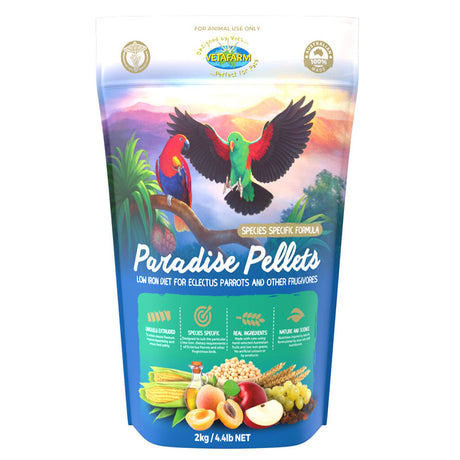
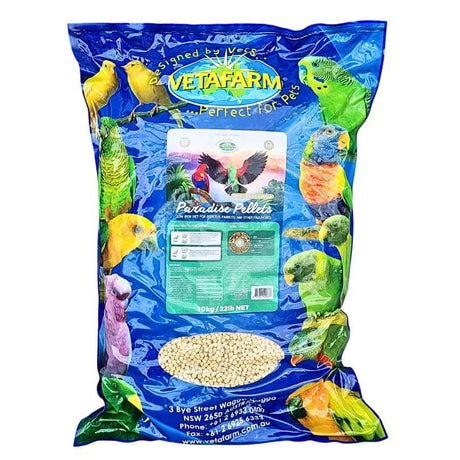
If you do feed pellets, look for one suited to the species rather than simply reaching for any parrot pellet. Vetafarm Paradise Eclectus Pellet is formulated specifically for Eclectus and other fruit-eating parrots and is one of the options readily available in Australia.
We'd still treat pellets as one part of a varied diet rather than allowing them to push fresh food out of the bowl.
We'd also avoid making sudden changes simply because you've read online that an Eclectus should never eat pellets. If your bird is healthy, maintaining a good weight and doing well on its current diet, large dietary changes are worth discussing with an avian vet.
Where Seed Fits
Seed isn't forbidden. It just shouldn't take over.
A predominantly dry seed diet doesn't provide the variety we're looking for in an Eclectus diet, particularly when the bird can simply pick through the bowl and eat its favourites.
That doesn't mean you need to throw the seed jar out.
A quality blend can be offered in controlled amounts, used in foraging toys or scattered through other foods. Nuts can be treated similarly. They're useful foods, but they're also rich, so a few go a long way.
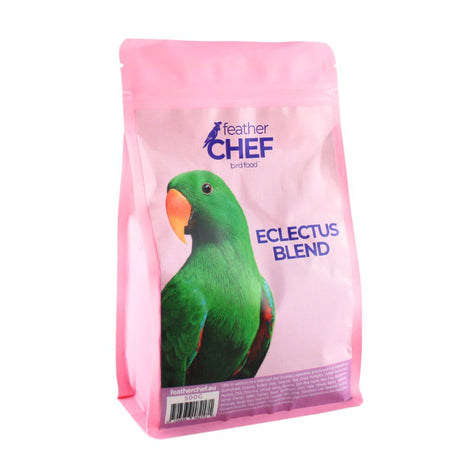
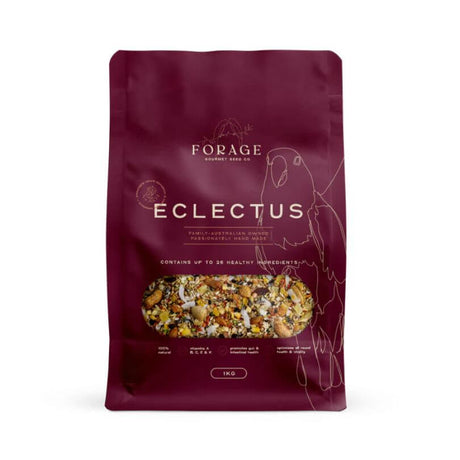
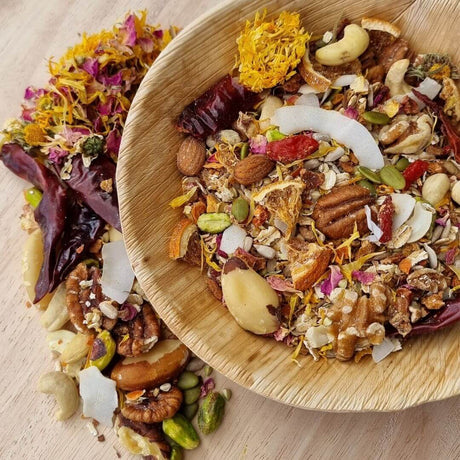
If you want a blend made specifically for the species, Feather Chef Eclectus Blend combines seeds and grains with nuts, dried fruit, herbs and vegetable ingredients, with reduced sunflower. There's also a No Sunflower option using the same blend without sunflower.
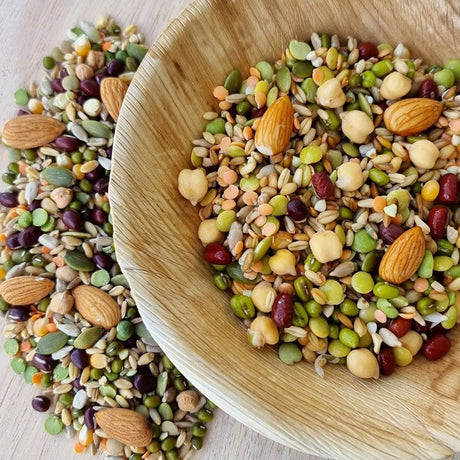
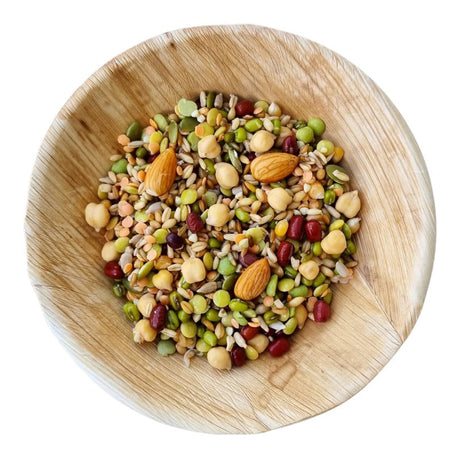
Raw for Birds Aussie Large Parrot Seed Blend is another option for larger parrots, with a varied mix of seeds, grains, nuts, herbs and edible flowers.
Whichever blend you use, think of dry seed as one part of the diet rather than the whole bowl.
Soaked and Sprouted Seed
This is where seed gets more interesting.
Soaking hydrates dry seed and changes its texture, while sprouting takes it further and allows germination to begin. Both can be useful additions to an Eclectus diet and give you another fresh option beyond fruit and vegetables.
See our guide to soaking seed and guide to sprouting seed for the methods.
Toe-Tapping and Wing-Flipping
If you keep an Eclectus, you've probably heard both terms.
Toe-tapping describes repeated involuntary movements of the toes, often a rhythmic opening, closing or tapping of the foot while the bird is resting.
Wing-flipping describes repeated flicking or dropping movements of the wings against the body.
Don't confuse either with an Eclectus stretching a foot, adjusting its grip, settling down to sleep or occasionally flicking its wings. It's the repetitive and involuntary nature of the movement that matters.
What Causes Toe-Tapping?
This is where you need to be careful with what you read online.
Toe-tapping is often blamed on pellets, fortified foods, vitamins, preservatives or one particular ingredient. Diet may be involved in some cases, and there are reports of symptoms improving after supplements or particular foods are removed.
But that doesn't mean every case has the same cause.
Toe-tapping and wing-flipping can also occur alongside medical problems, so persistent symptoms shouldn't simply be treated as a diet problem at home.
If your Eclectus suddenly develops repetitive toe-tapping or wing-flipping, especially if there are any other changes in behaviour, appetite, droppings or movement, contact an avian vet.
It's useful to make a note of everything your bird has been eating, including pellets, supplements, treats and any recent dietary changes. That gives your vet something useful to work with.
Do Eclectus Need Vitamin Supplements?
Not automatically.
More isn't better when it comes to vitamins and minerals.
If your Eclectus is already eating fortified pellets or another formulated food, adding vitamin powders on top can mean you're supplementing nutrients that are already being supplied.
This is one area where we'd rather see supplementation used for a reason than sprinkled over the bowl just in case.
If you think your bird's diet is deficient, or an avian vet has identified a particular nutritional problem, that's different. Supplement according to the advice you're given rather than trying to build a vitamin program from internet recommendations.
What We'd Avoid
- An all-seed diet. Eclectus need far more variety than a bowl of dry seed provides.
- Letting fruit dominate the fresh bowl. Most Eclectus won't complain if you hand them the sweetest option first. Keep the vegetables coming too.
- Large amounts of fatty seed and nuts. They're useful foods, but they're easy to overfeed.
- Adding supplements without a reason. Particularly when you're already feeding fortified foods.
- Sudden diet overhauls. Change gradually and keep an eye on what your bird is actually eating, not just what you've put in the bowl.
- Assuming every unusual movement is dietary. Toe-tapping and wing-flipping deserve proper investigation if they're persistent.
A Practical Way to Feed an Eclectus
You don't need 27 containers in the fridge or a different recipe every morning.
Start with a varied fresh mix built mainly around vegetables. Rotate the ingredients rather than making exactly the same chop every week. Add some fruit, soaked or sprouted seed, cooked legumes and whatever other foods suit the way you feed your bird.
Pellets such as Vetafarm Paradise Eclectus Pellet can form part of that routine, while dry blends such as Feather Chef Eclectus Blend, including the No Sunflower option, or Raw for Birds Aussie Large Parrot Seed Blend can add variety without becoming the entire diet.
And use the bird in front of you.
Weight, appetite, droppings, feather condition, activity and what actually disappears from the bowl all tell you more than a perfect-looking feeding chart stuck to the fridge.
Eclectus Diet FAQs
Can Eclectus Eat Pellets?
Yes. Some Eclectus eat pellets successfully as part of a varied diet. Pellets remain more debated for this species than for many other parrots, so we wouldn't insist that every Eclectus must eat them or that every Eclectus must avoid them.
If you want a pellet made specifically with Eclectus in mind, Vetafarm Paradise Eclectus Pellet is one option.
Can Eclectus Eat Seed?
Yes. Seed can be included, but we wouldn't use a predominantly dry seed diet. Keep it as one part of a much more varied feeding routine.
Feather Chef Eclectus Blend is made specifically for Eclectus and is available with reduced sunflower or as a No Sunflower option. Raw for Birds Aussie Large Parrot Seed Blend is another option for larger parrots.
What Vegetables Are Good for Eclectus?
Offer as much variety as practical, particularly colourful vegetables and dark leafy greens. Carrot, Pumpkin, Capsicum, Sweet Potato, Broccoli, Peas, Beans, Kale, Rocket and Silverbeet are all useful foods to rotate through.
Can Eclectus Eat Fruit Every Day?
Fruit can be part of the daily fresh-food offering. We'd simply avoid letting fruit crowd vegetables out of the bowl, particularly with a bird that happily eats Mango while carefully dropping every piece of Broccoli onto the floor.
Do Eclectus Need a Special Diet?
They benefit from a varied diet with plenty of fresh food, but there isn't one universally agreed Eclectus menu that every bird must follow. Individual birds, activity levels, health and what else is being fed all matter.
Does Toe-Tapping Mean My Eclectus Is Getting Too Many Vitamins?
Not necessarily. Diet and supplementation may be involved in some cases, but toe-tapping can have other causes as well. New or persistent repetitive toe movements are something we'd discuss with an avian vet rather than diagnosing from the food bowl alone.
The Bottom Line
Eclectus aren't difficult to feed. They just don't reward lazy feeding particularly well.
Give them plenty of variety, make fresh vegetables a big part of what you offer, don't let seed or fruit take over, and don't get trapped by the idea that there is one magic Eclectus diet everyone has somehow agreed on.
There isn't.
A good Eclectus diet is varied, practical enough that you can keep doing it, and adjusted to the bird that's actually eating it.