



 Sold out




 Sold out






 Sale
Sale



Frequently Asked Indian Ringneck Questions
Why is my Ringneck suddenly biting or moody?
Why is my Ringneck suddenly biting or moody?
This is almost always the adolescent "bluffing" phase, a hormonal stage roughly between 1 and 3 years old. It's temporary and normal, and calm, consistent handling through it works far better than reacting to the lunging and nipping.
When does the neck ring appear?
When does the neck ring appear?
Males develop their full ring at around 2–3 years old as they mature. Females don't get a complete ring, so a ringless bird isn't necessarily a hen, it may just be a young male.
What should I feed an Indian Ringneck?
What should I feed an Indian Ringneck?
A pellet-forward diet with fresh vegetables and a quality seed blend.
Feather Chef Indian Ringneck Blend ($15.99–$89.99) or Forage Gourmet Alexandrine and Ringneck Blend ($15.99–$109.99), with Feather Chef Indian Ringneck Treat ($19.99–$44.99) for training rewards.
Do Indian Ringnecks talk?
Do Indian Ringnecks talk?
Yes, they're considered among the clearest-talking parrot species, often picking up words and short phrases with regular, patient practice.
How much space and enrichment does a Ringneck need?
How much space and enrichment does a Ringneck need?
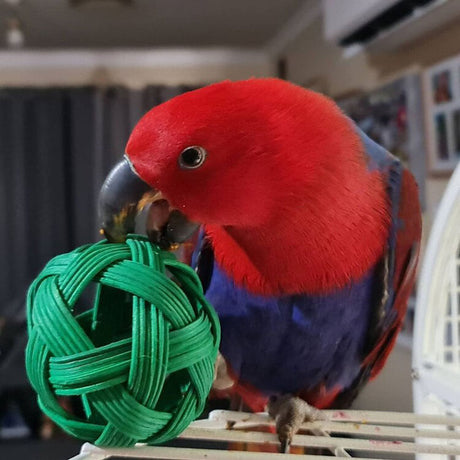
They're active, confident fliers, so a wide cage plus daily supervised out-of-cage time matters. Rotate in sturdy chew toys to keep a Ringneck's active beak busy.


